




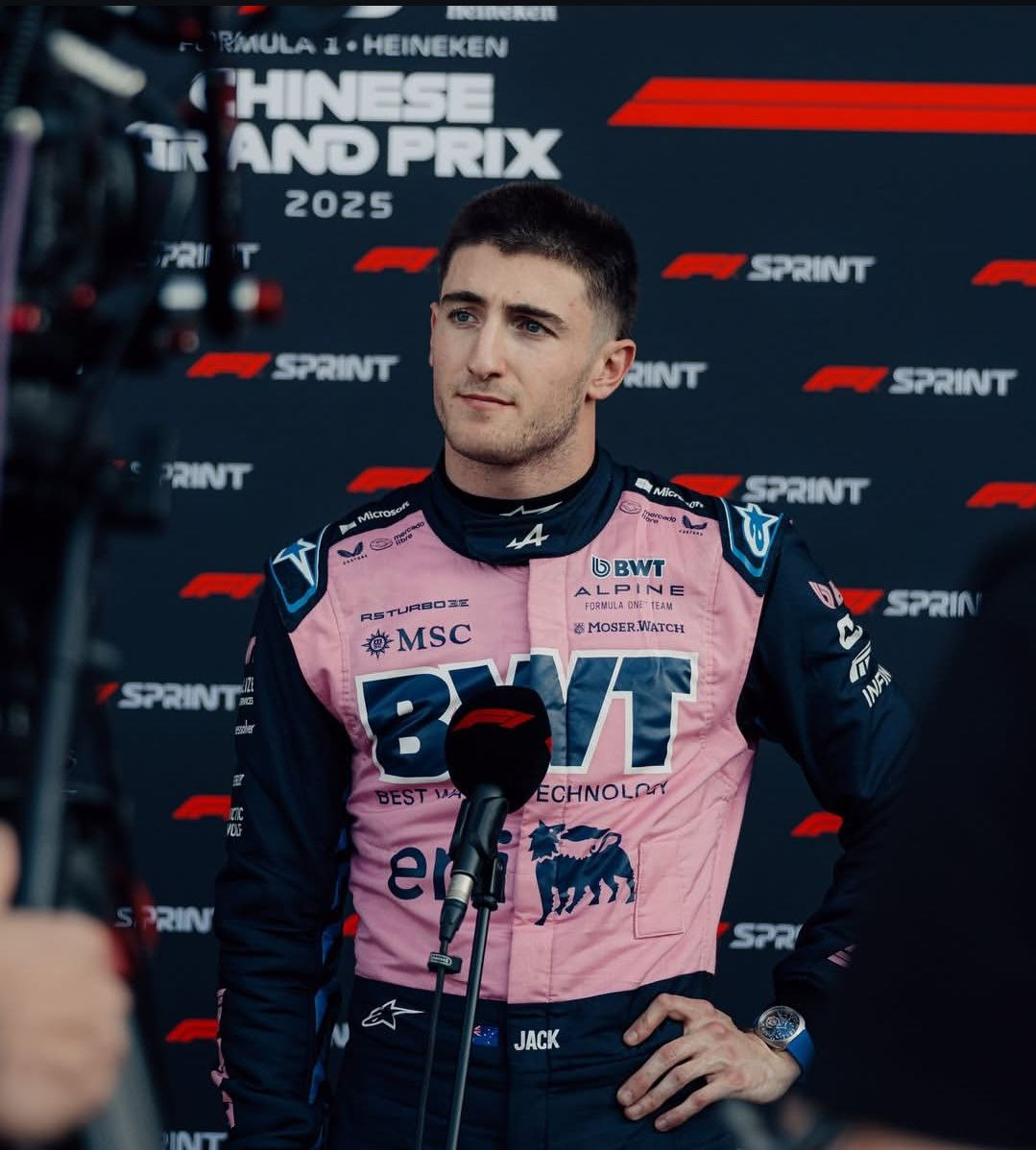
2025 may not have gone to plan for the Formula One racer Jack Doohan, but that has not quashed the young Australian’s ambition to be the future of F1.
But that ambition has been tested this year. Doohan continues to wait in the wings for his return to the grid. Yet there is no resting as he keeps up his meticulous fitness routine, primed for the next opportunity.
The training

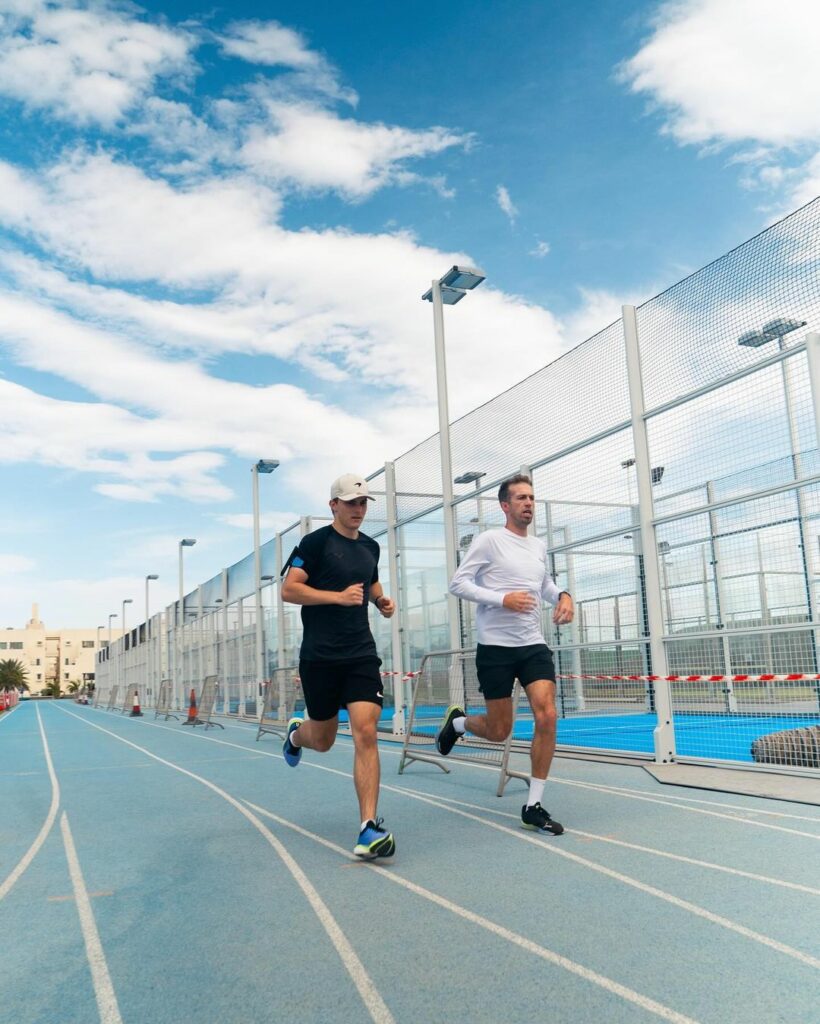
The 22-year-old builds his weeks around seven bike sessions, four endurance-focused gym circuits, and evening runs that push his pace into threshold territory.
At 183cm and a lean 74kg, he’s trained his body into the exact shape a modern F1 driver needs: light, powerful, and conditioned for long stints behind the wheel. His diet is just as calculated – high fibre, carb-adjusted to training levels – solid proof that his lifestyle is as relentless as his ambition.
With strong sponsorships secured with Oakberry and Before You Speak Coffee, each of his partnerships echoes his core values of health, discipline, and drive.
Seven days a week on the bike, seeing the gym more than his own bedroom, no rest days, no indulgences. What might seem extreme to most is simply part of Doohan’s normal training routine. His training approach shows how consistent discipline can push physical limits further than most expect. While many athletes treat recovery as downtime, Doohan uses those periods to refine his conditioning, maintaining a focus on the demands of high-speed racing.
Like any elite athlete, Doohan’s training takes no single form, and his routine adapts to wherever he is in the world. But one thing never changes: the intensity. Doohan’s version of a rest day still includes a 30km ride in the saddle to keep his legs pumping.
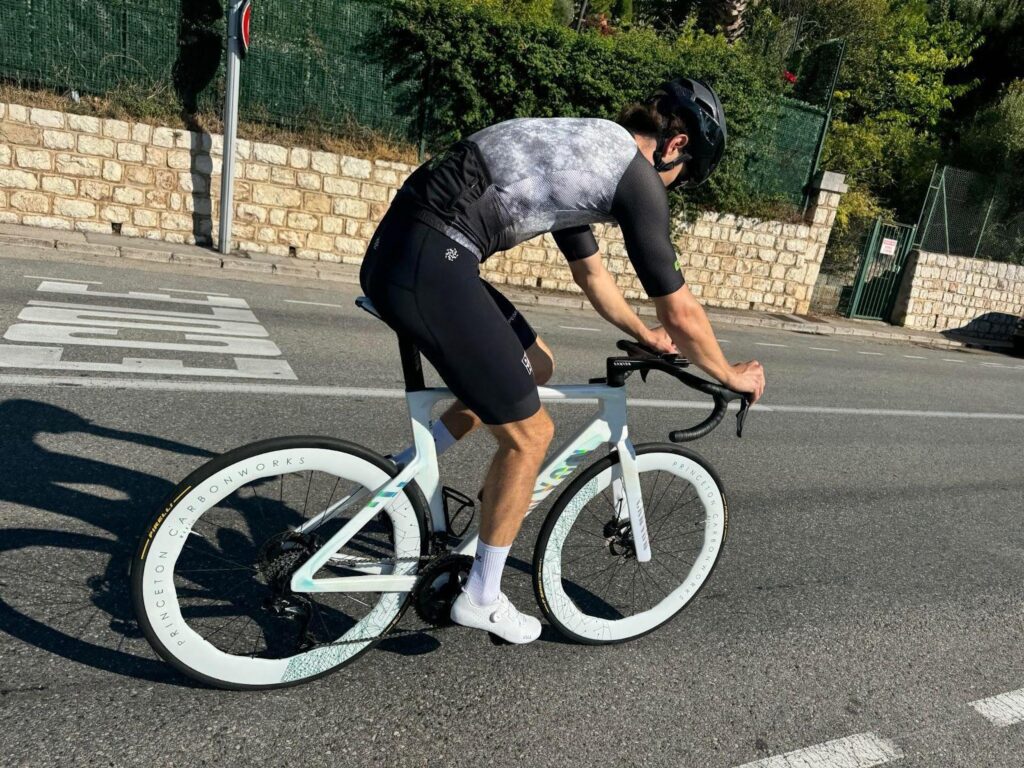
But a normal, everyday bike ride is a full-throttle effort, consisting of an intense 70k ride at a threshold between zones 3 and 5. Some days, the focus is on balancing steady endurance with high-tech Zwift training at home, with careful instruction from Sergi Bou Garcia, Doohan’s trusted fitness coach.
Specifically in the gym, the goal is muscle endurance, not bulk. At over 6ft, he is tall for an F1 driver and puts on muscle easily, working against the 80kg weight limit for driver and kit combined. Staying at 74kg requires precision, essentially having to work harder than shorter drivers, whilst also striking the necessary balance between being an ideal racing weight, whilst ensuring his body is at the optimum weight for his health.
So how does he do this? Fast-moving circuits, including chest presses, pull-ups, squats, deadlifts, RDL, all at lower weights with high reps, 15-30 at pace. His sessions run from 60-90 minutes, designed intricately to leave him stronger, not heavier.
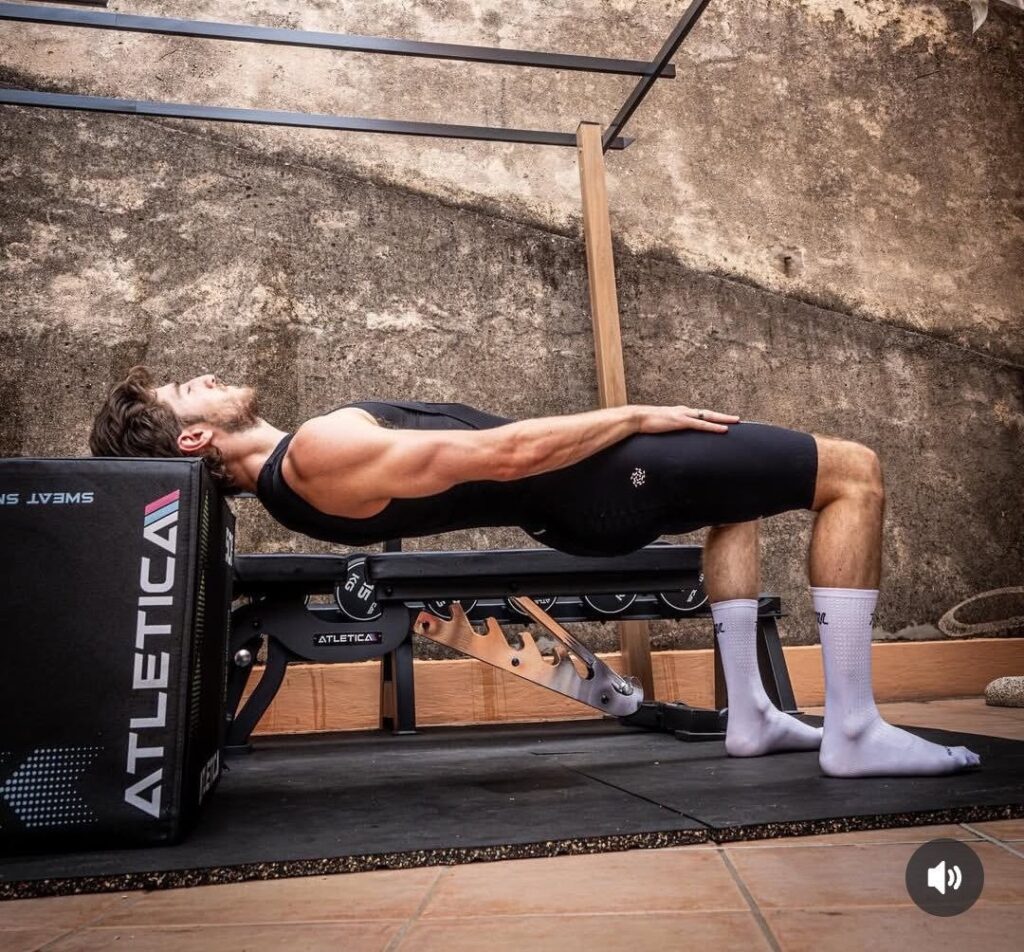
The neck training is a critical aspect of his workouts, ensuring he can withstand the G-forces of F1. These range from planks with his head on a bench, side-to-side holds, and resistance harnesses with bands of varying tension.
Adding in the runs of 7-10km, often threshold sessions that keep his 5K PB at a blistering 16:55, and you start to see the picture: Doohan is not training for aesthetics. He’s training for survival at 200mph.
As previously mentioned, the wise guide behind the scenes of this exemplary workout routine is Sergi Bou Garcia, who has been by Doohan’s side since 2022. Together, they’ve built a programme that leaves no weaknesses, where “rest” is only a word, never a reality.
The nutrition
Doohan’s nutrition mirrors his training: disciplined, purposeful, and built specifically for his needs. But unlike the extreme advice you often hear from the louder corners of sports nutrition, his diet isn’t about restriction; it’s about balance.
“If you’re doing the volume, you can have the carbs.” Just like his car, Doohan does the hard miles in exchange for the earned fuel.
He does not promote unrealistic weekly schedules or obsessive meal prepping; he highlights how critical it is to listen to his body and adapt day by day. Heavy training days call for more carbs, like brown pasta, brown rice, quinoa, and whole-grain bread. Whilst lighter days, such as travel days, result in cutting them back.
Whilst carbs are adaptable, fibre is a constant. He emphasises that high intake of fibre is integral for managing the physical toll of racing and the stress that comes with it, and so he preps for this by always making sure there’s enough fibre.
His weekly meal examples include rice with broccoli and beans. Paired with a rotation of chicken, salmon,n or lean bee,f or pasta pomodoro topped with tuna, all simple yet effective combinations designed to hit macros whilst keeping his body light and efficient.
But even the strictest systems have a release valve. Every few weeks, after a particularly punishing ride (that’s 100km in the saddle) he does treat himself to a rare indulgence. A big old burger and chips from McDonald’s. But these moments are earned, and not taken for granted, and prove that elite athletes are human and have cheat days, they just put in a gruelling amount of work for it.
Nutrition is important to all athletes, but to Doohan , it’s his fuel. His recovery. It’s one more way he proves that being the future of F1 is as much about discipline at the table as it is about performance on the track.
The mindset
In a sport where margins are measured in milliseconds, Doohan doesn’t leave any to chance: no alcohol, no compromise, just an athlete fine-tuning his own engine to perfection. Doohan has never touched alcohol because, for him, nothing takes priority over his health and fitness. Every decision he makes, even outside the world of fitness and nutrition, is filtered through the lens of maximising his performance.
However, unlike his cars, he isn’t a machine, just a human in one. His own human body comes with its weaker days and lower energy levels. Subsequently, he and Sergi practice adaptive training: micromanaging the balance between a structured plan and flexibility. If sleep has been rough or he feels fatigued, a punishing VO2 max session can be dialled back to zone 3-4 endurance work. Simultaneously, if energy is high, he will maximise thresholds. Listening to your own body isn’t a weakness, Doohan insists, it’s strength and sustainability. In this way, he is able to refresh his disappointments, never letting setbacks stall his momentum.
It is this attitude that he admirably held when faced with the disappointment of 2025. Doohan sees this as another reason to train harder, eat cleaner, and keep looking forward with confidence that he will get back into a seat for 2026 or even 2027.
Doohan has proven to be resilient and stoic in the face of setbacks, but talent and discipline like this don’t stay overlooked for long. The question is surely not if he will return to racing an F1 car, but when.
This article is for informational purposes only and does not substitute for professional medical advice. If you are seeking medical advice, diagnosis or treatment, please consult a medical professional or healthcare provider.
Switzer staff were not involved in production of this article